
Did you know 92% of a watermelon’s weight comes from water, making it one of nature’s most hydrating snacks? Meanwhile, cantaloupe quietly delivers 100% of your daily vitamin A needs in just one cup. These juicy summer favorites aren’t just refreshing—they’re nutritional powerhouses with unique strengths worth exploring.
I’ve always loved how these fruits balance sweetness and nutrition. Whether you’re slicing them for a picnic or blending into smoothies, their versatility shines. But what really sets them apart? Let’s dive into their vitamin profiles, antioxidant levels, and how they fuel your body differently.
In this guide, I’ll break down their sugar content, fiber counts, and calorie differences using the latest research. You’ll also get my go-to tips for adding both to meals—from savory salads to guilt-free desserts. Ready to see which fruit aligns with your health goals?
Contents
- 1 Introduction: A Refreshing Comparison
- 2 Watermelon vs Cantaloupe: A Detailed Comparison
- 3 Nutritional Breakdown and Health Benefits
- 4 Key Nutrients: Vitamins and Minerals Showdown
- 5 Physical Characteristics and Taste Profiles
- 6 Culinary Uses and Recipe Ideas
- 7 Growing Conditions and Seasonal Availability
- 8 Potential Side Effects and Considerations
- 9 Practical Tips for Including Melons in Your Diet
- 10 Conclusion
- 11 FAQ
- 11.1 Which melon is better for staying hydrated?
- 11.2 How do their vitamin levels compare?
- 11.3 Are these fruits good for weight management?
- 11.4 Can people with diabetes enjoy them safely?
- 11.5 What’s the best way to add them to meals?
- 11.6 Do they grow in similar climates?
- 11.7 Are there risks to eating too much?
- 11.8 Which has more minerals like potassium or magnesium?
Key Takeaways
- Both fruits provide exceptional hydration, ideal for hot days or post-workout recovery.
- Cantaloupe leads in vitamin A, while watermelon offers more lycopene—a potent antioxidant.
- Watermelon has fewer calories per serving, making it a light snack option.
- These summer staples work in both sweet and savory dishes, expanding culinary creativity.
- Fiber content differs slightly, affecting digestion and fullness levels.
Introduction: A Refreshing Comparison
Every summer, my kitchen counter transforms into a colorful display of melons. Their vibrant hues and sweet aromas instantly lift my mood. These seasonal gems aren’t just delicious—they’re nature’s answer to beating the heat while nourishing your body.
Overview of Summer Melons
From backyard barbecues to poolside snacks, melons dominate warm-weather menus for good reason. Their high water content (over 90% in most varieties) makes them perfect for staying hydrated. I’ve found they’re also packed with vitamins that support skin health and overall wellness—a true multitasking food.
While all melons share that signature juiciness, their nutrient profiles tell distinct stories. Some shine in vitamin A content, others boast antioxidant power. This diversity means you can mix and match them throughout summer for maximum health benefits.
Why I Love These Fruits
My love for melons started during childhood summers at my grandma’s farm. We’d pick them sun-warmed from the vine, their sweet juices running down our arms. Today, I still get that same joy slicing into a ripe melon—whether adding chunks to spicy salads or blending them into cooling soups.
What fascinates me most is their culinary flexibility. They’re equally at home in savory dishes with feta and mint as they are in fruity desserts. This adaptability makes melons my go-to ingredient for creating light, refreshing meals that keep me energized all season.
Watermelon vs Cantaloupe: A Detailed Comparison
When I compare these summer favorites side by side, their nutritional profiles reveal some surprises. Let’s unpack the numbers to see how they stack up in key areas like energy boosters and daily vitamin needs.

Nutritional Composition at a Glance
| Nutrient | 1 Cup (Diced) | 1 Cup (Diced) |
|---|---|---|
| Calories | 46 | 53 |
| Sugar (g) | 9.5 | 12 |
| Fiber (g) | 0.6 | 1.4 |
| Vitamin A (% DV) | 5% | 108% |
| Vitamin C (% DV) | 14% | 61% |
| Lycopene (mg) | 6,900 | 0 |
What Sets Them Apart
The orange-fleshed fruit delivers a vitamin A knockout—one cup meets your entire daily need. It’s also richer in vitamin C, perfect for immune support. Meanwhile, the pink-hued option stands out with lycopene, an antioxidant linked to heart health.
Though both are low in protein (under 1g per serving), their carb profiles differ. The sweeter choice contains more natural sugars, mainly glucose, giving quicker energy. The slightly fibrous one helps maintain steadier blood sugar levels.
For those tracking “watermelon cantaloupe” comparisons, remember: one’s a hydration hero with fewer calories, while the other packs a vitamin punch. Mix both into your diet to maximize benefits!
Nutritional Breakdown and Health Benefits
There’s a reason these juicy fruits dominate summer spreads beyond just taste. Their unique nutrient combinations deliver tangible benefits that keep your body thriving in the heat. Let’s explore how their natural components work together to support hydration, energy, and long-term wellness.

Hydration, Weight Loss, and Energy
Both fruits act as natural hydration stations. With over 90% water content, they help replenish fluids lost through sweat during summer activities. I’ve found their low calorie density—about 50 calories per cup—makes them ideal for weight-conscious snacks. The water volume fills you up faster, naturally curbing overeating.
Potassium plays a key role here too. A single serving provides 6-12% of your daily needs, helping balance fluids and regulate blood pressure. This mineral partnership between water and potassium keeps muscles functioning smoothly during workouts or beach days.
Immune and Heart Support
Antioxidants take center stage in their health benefits. The red-fleshed fruit delivers lycopene, linked to reduced oxidative stress in cardiovascular studies. Its orange counterpart counters with beta-carotene and folate—nutrients that sharpen immune responses and support healthy blood flow.
Traditional medicine has long used these fruits for cooling properties, while modern research confirms their mineral-rich profiles. Try blending them into post-workout smoothies or tossing cubes into leafy salads. Their natural sweetness and crunch make boosting your diet’s nutrient density deliciously simple.
Key Nutrients: Vitamins and Minerals Showdown
When I slice into these summer favorites, their colors hint at hidden nutritional treasures. The vibrant orange and pink hues aren’t just eye candy—they’re visual clues to the vitamins and minerals packed inside each juicy bite. Let’s explore how their nutrient profiles stack up in this friendly face-off.
Antioxidants and Vitamin Power
The orange-fleshed melon delivers a vitamin A knockout—108% of your daily needs per cup. Its beta-carotene content supports healthy vision and skin. Meanwhile, the pink-hued variety boasts 6,900 mcg of lycopene, an antioxidant linked to heart health. That’s nearly 70% more than raw tomatoes!
While neither fruit contains vitamin B12, the orange one shines with folate (8% DV), crucial for red blood cell production. Both provide vitamin C, but the orange variety nearly triples its competitor’s content. These differences make each fruit uniquely valuable for immune support and energy metabolism.
Minerals, Fiber, and Their Daily Coverage
Calcium and phosphorus levels tell an interesting story. The pink melon offers 1% DV calcium versus 2% in its counterpart. Both contribute to bone health, but the orange variety adds 8% of your daily copper needs—a mineral essential for iron absorption.
Fiber content creates another contrast. The orange fruit provides 1.4g per cup compared to 0.6g in the pink option. This difference impacts digestion speed and nutrient absorption. Magnesium levels also vary, with the orange melon delivering 5% DV versus 4% in the other—small margins that add up in a balanced diet.
What surprises me most? How these fruits complement each other. Pair them in salads or smoothies to get lycopene’s antioxidant power plus copper’s metabolic support. Together, they cover 15% of your daily potassium needs, keeping muscles and nerves functioning smoothly.
Physical Characteristics and Taste Profiles
Biting into a ripe melon feels like summer exploding in your mouth. The way light dances across their rinds tells you everything about what’s inside—crunchy sweetness or velvety richness waiting to be discovered.

Skin Deep Differences
The green-skinned fruit wears a smooth, striped coat hiding ruby-red flesh dotted with dark seeds. Its texture crumbles like sugar crystals when you bite in, releasing rivers of juice. In contrast, the orange variety sports a rugged, netted exterior that gives way to soft, seed-speckled flesh. Running your thumb over its surface feels like tracing a topographic map.
A Symphony of Flavors
One delivers pure, candy-like sweetness with every crisp piece—its high water content creating liquid refreshment. The other offers complex notes: floral honeydew with earthy undertones, its aroma lingering like perfume. Sugar levels vary subtly—12g versus 9.5g per cup—but texture plays equal role. The fibrous cells in the orange melon slow flavor release, making each bite last longer.
Both shine as cholesterol-free treats with negligible fat. Their natural sugars come packaged with vitamins and minerals, turning every juicy slice into guilt-free nourishment. Whether you crave instant hydration or layered flavors, these melons transform simple snacking into sensory exploration.
Culinary Uses and Recipe Ideas
The best part about summer fruits? Their ability to transform from simple snacks into showstopping dishes. I’ve spent countless afternoons experimenting with these melons—discovering how their textures and flavors elevate both sweet and savory creations.
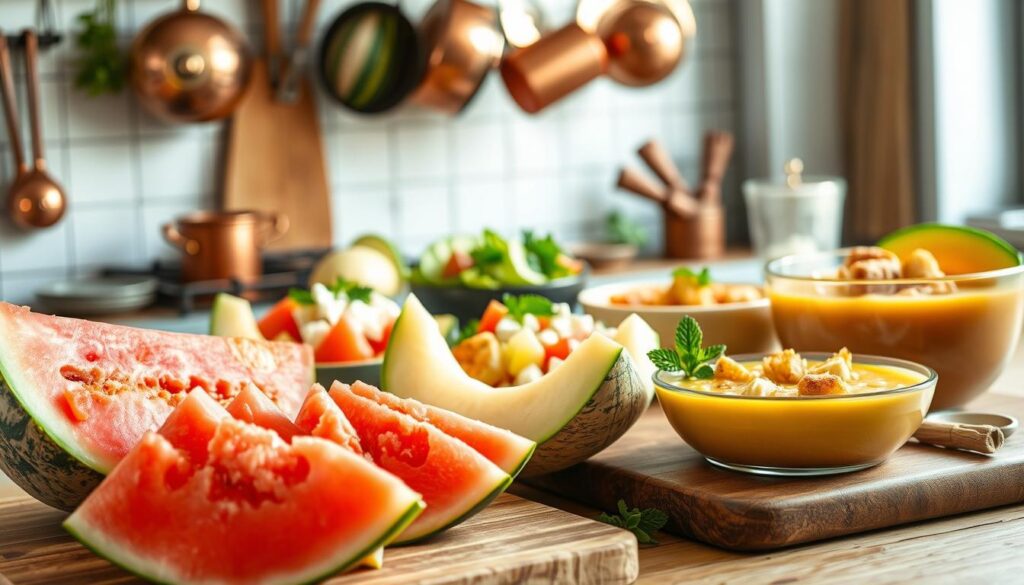
Enjoying Them Raw and in Salads
For a quick protein boost, I layer 1 cup of cubed melons with grilled chicken and mint. The juicy pieces balance the savory elements perfectly. Another favorite: spicy cucumber salad with lime dressing. Toss ½ cup melon balls with chili flakes and roasted peanuts for crunch.
Try this trick: freeze melon cubes overnight. They’ll keep your fruit salads chilled without watering them down. I often mix varieties for color contrast—orange and pink chunks make any plate Instagram-ready!
Fresh Juices, Smoothies, and Sorbets
My go-to morning smoothie combines 1 cup melon, spinach, and Greek yogurt. The yogurt adds vitamin B12, while the fruit keeps sugar levels in check. For parties, I blend melons with coconut water into ice pop molds—a hit with kids and adults alike.
Sorbet requires just three ingredients: 4 cups frozen melon, 1 tbsp honey, and lime juice. Blend until smooth for a fat-free dessert that satisfies sweet cravings. Pro tip: add basil leaves to your juicer for an herbal twist that complements the natural sweetness.
These recipes show how melons work within a balanced system of foods. Pair them with nuts, greens, or dairy to create meals that nourish and delight. What’ll you try first?
Growing Conditions and Seasonal Availability
I learned the hard way that melons are picky about their soil. During my first gardening attempt, I watched vines wither despite daily watering. Turns out, these fruits demand precise conditions to develop their signature sweetness and juiciness.

Ideal Environments for Cultivation
Soil acidity makes or breaks melon growth. The green-striped variety thrives in slightly acidic earth (pH 6.0-6.8), while its orange-fleshed cousin prefers pH 6.1-6.7. Too much acid locks nutrients in soil, starving plants. I test my garden beds yearly using $10 kits from the hardware store.
| Factor | Watermelon | Cantaloupe |
|---|---|---|
| Soil Type | Sandy loam | Well-drained clay |
| Daily Sun | 6-8 hours | 8-10 hours |
| Water per Week | 1-2 inches | 1-1.5 inches |
| Days to Harvest | 70-90 | 80-100 |
Temperature matters too. Seeds sprout best when soil hits 70°F. Last spring, I rushed planting and lost half my seedlings. Now I wait until nighttime temps stay above 50°F consistently.
Drainage affects fruit cells dramatically. Soggy roots cause bitter flavors and mushy textures. Raised beds with compost work wonders—I mix 1 cup perlite into every 5 gallons of soil for better airflow.
Peak seasons vary by region. Southern states enjoy melons from May to September, while northern growers harvest July through August. Farmers’ markets often have the freshest picks since these foods don’t travel well once ripe.
Small changes yield big differences. Reducing water by 20% during final growth stages concentrates sugars. But cut too much, and you’ll shrink the amount of edible flesh. It’s a delicate balance I’m still mastering!
Potential Side Effects and Considerations
While slicing melons for a summer party last week, I realized even nature’s candies need mindful consumption. Their vibrant nutrients come with a few caveats worth noting—especially for those managing specific health conditions.

Balancing Sweetness and Minerals
These fruits’ natural sugars—while healthier than processed sweets—can still spike blood sugar if overeaten. A client once shared how eating four cups daily caused energy crashes. Moderation matters, particularly for those monitoring glucose levels.
The potassium content also demands attention. Though great for blood pressure regulation, excessive amounts may strain kidneys. My nutrition professor always said: “Too much of any good thing becomes a liability.” This rings true here—balance prevents hyperkalemia risks.
Even their acid content plays a role. While mild compared to citrus, frequent snacking could affect tooth enamel. I rinse my mouth with water after enjoying melon-heavy meals—a simple trick my dentist approves.
Personalized Portions for Health Needs
- Kidney concerns: Limit to ½ cup daily if advised to restrict potassium
- Diabetes management: Pair with protein like nuts to slow sugar absorption
- Heart health: Monitor overall intake if using blood pressure meds
Surprisingly, overindulging might indirectly impact cholesterol. One study found excessive fruit sugars could alter lipid profiles in sensitive individuals. But this isn’t common—most people enjoy melons safely within recommended servings.
Remember, your body’s cells process nutrients uniquely. What works for me might differ for you. When in doubt, chat with your doctor about fitting these juicy treats into your health plan. With smart portions, you’ll reap benefits without the risk!
Practical Tips for Including Melons in Your Diet
My meal prep Sundays always include sliced melons—they’re my secret weapon for staying refreshed all week. The trick is balancing their natural sweetness with other nutrient-rich foods while keeping portions in check. Here’s how I maximize flavor without overdoing sugar levels.
Smart Portioning Made Simple
I stick to 1 cup servings—about the size of a baseball—for daily snacks. This provides hydration and vitamins without spiking blood sugar. For desserts, I mix ½ cup melon cubes with plain yogurt and chia seeds. The combo slows sugar absorption and adds fat-free protein.
Pre-cut melons save time but lose nutrients faster. Instead, I slice whole fruits into wedges and store them in airtight containers. This preserves their body-friendly antioxidants for up to five days. Bonus tip: Freeze chunks in silicone trays for instant smoothie boosters!
Flavor-Packed Pairings
- Breakfast: Layer melon balls with cottage cheese and almonds—balances natural sugars with 10g protein
- Lunch: Toss cubes into kale salads with grilled chicken. The vitamin C helps absorb iron from greens
- Snacks: Skewer melon with mozzarella balls and basil—creamy meets crisp in every bite
These combinations support your system by pairing fast-digesting carbs with sustaining proteins. I’ve found that adding a dash of lime or chili powder enhances flavor without extra calories. Remember—variety is key to minimizing dietary risk while enjoying nature’s candy!
Conclusion
Exploring these melons has reminded me how nature packages wellness in juicy, vibrant forms. While one shines with vitamin A for glowing skin, the other delivers lycopene—a powerful antioxidant that supports heart health. Their nutritional comparison reveals complementary strengths, making both worthy additions to your plate.
Through my kitchen experiments, I’ve found balance is key. A cup of crisp melon pieces post-workout replenishes fluids, while the orange variety’s fiber keeps me satisfied longer. Together, they nourish cells with essential vitamins without spiking blood pressure or sugar levels dramatically.
My advice? Enjoy them in rotation. Blend into smoothies, toss into salads, or savor chilled chunks. Just remember—moderation minimizes any risk while maximizing benefits for your body. Thanks for joining this fruity deep dive! I’d love to hear how you’re incorporating these melons into your health journey. Share your favorite recipes below!
FAQ
Which melon is better for staying hydrated?
How do their vitamin levels compare?
Are these fruits good for weight management?
Can people with diabetes enjoy them safely?
What’s the best way to add them to meals?
Do they grow in similar climates?
Are there risks to eating too much?
Which has more minerals like potassium or magnesium?

Hello, I am Carolyn J. Vance, the dedicated author behind the enriching content you find on MelonWatermelonHaven.com. My website is your ultimate guide to the delightful world of melons and watermelons, offering a plethora of information and tips to enhance your knowledge and experience with these refreshing fruits.
In my recent articles, I have ventured into various intriguing topics, providing you with a step-by-step guide on how to make watermelon moonshine at home, and sharing expert tips and tricks on how to choose a ripe watermelon on the vine. I also take you on a gastronomic journey exploring the delicious world of Pepino melon with tips and recipes to try at home.
My passion for these fruits extends to offering guidance on finding the perfect kitchen tools, such as the best places to purchase a melon baller to enhance your culinary adventures. I am here to answer all your melon-related queries, be it understanding the refreshing flavor of honeydew melon or learning about the best time to plant watermelon in North Carolina.
I invite you to explore the rich content on MelonWatermelonHaven.com, where every article is crafted with meticulous attention to detail, aiming to offer you a deeper understanding of the vibrant world of melons and watermelons. Let’s embark on this flavorful journey together, one melon at a time!